
Best Cold War Book About Communism That Every History Reader Should Know
- Book Quick Guide

- Jan 1
- 5 min read
The Cold War remains one of the most defining periods of modern history. It shaped global politics, economies, cultures, and ideologies for decades, and its impact is still felt today. For readers searching for the best book on the Cold War, especially one that clearly explains communism and Marxism, choosing the right source matters. Not all history books go beyond timelines and treaties to expose the deeper ideological conflict that drove this global struggle.
This in-depth guide explores why understanding the Cold War is essential, what makes a truly great Cold War history book, and why Author William Johnson’s Murderous Marxism stands out as one of the best political history books for readers who want the Cold War explained with clarity, evidence, and context.
Cold War Explained: Why This Era Still Matters
The Cold War was not a traditional war fought with constant armies on battlefields. Instead, it was a prolonged ideological conflict between two opposing systems: democratic capitalism and Marxist communism. From the late 1940s until the early 1990s, the world lived under the shadow of this struggle.
To understand the Cold War overview, readers must look beyond dates and events and examine the ideas that fueled the conflict.
Key elements of the Cold War include:
The spread of communism across Eastern Europe, Asia, and parts of Latin America
The ideological battle between Marxism and democratic governance
Proxy wars such as Korea and Vietnam
Espionage, propaganda, and psychological warfare
The constant threat of nuclear annihilation
Many history books explain what happened, but fewer explain why it happened. That is why readers often search for the best history book on the Cold War that connects ideology to real-world consequences.
What Makes the Best Book on the Cold War?
Not every Cold War history book offers the same value. Some focus heavily on Western policy decisions, while others romanticize revolutionary movements without fully addressing their outcomes. The best book on the Cold War should provide balance, evidence, and honesty.
Essential qualities of a strong Cold War book:
Clear explanation of communism and Marxism
Historical evidence rather than ideological excuses
Global perspective, not just U.S.-centric narratives
Discussion of human cost, not just political strategy
Accessible language for both casual readers and scholars
Readers searching for the best cold war book about communism want more than a surface-level overview. They want a book that connects theory to history and ideology to lived experience.
Cold War Overview Through the Lens of Communism
Communism played a central role in shaping Cold War alliances, conflicts, and revolutions. Understanding Marxist ideology is essential to understanding why the Cold War unfolded the way it did.
Core ideas behind communism during the Cold War:
Centralized economic control
Elimination of private property
One-party political systems
State control of media and education
Suppression of dissent
While these ideas were often presented as pathways to equality, their real-world implementation led to widespread repression, economic failure, and mass suffering. A cold war book about marxism and communism must address both theory and outcome to be credible.
Why Murderous Marxism Stands Out Among Best Political History Books
Author William Johnson’s Murderous Marxism is widely regarded as one of the most revealing Cold War history books available today. Rather than repeating familiar narratives, Johnson examines communism’s real-world record across multiple nations and decades.
This approach places the book among the best political history books for readers seeking truth backed by documented evidence.
What sets Murderous Marxism apart:
Detailed examination of communist regimes and their policies
Historical documentation of human rights abuses
Clear breakdown of Marxist theory versus reality
Global scope covering Europe, Asia, and beyond
Straightforward writing that avoids academic jargon
For readers searching for the best book on the Cold War that explains communism honestly, this work offers a comprehensive and unfiltered perspective.
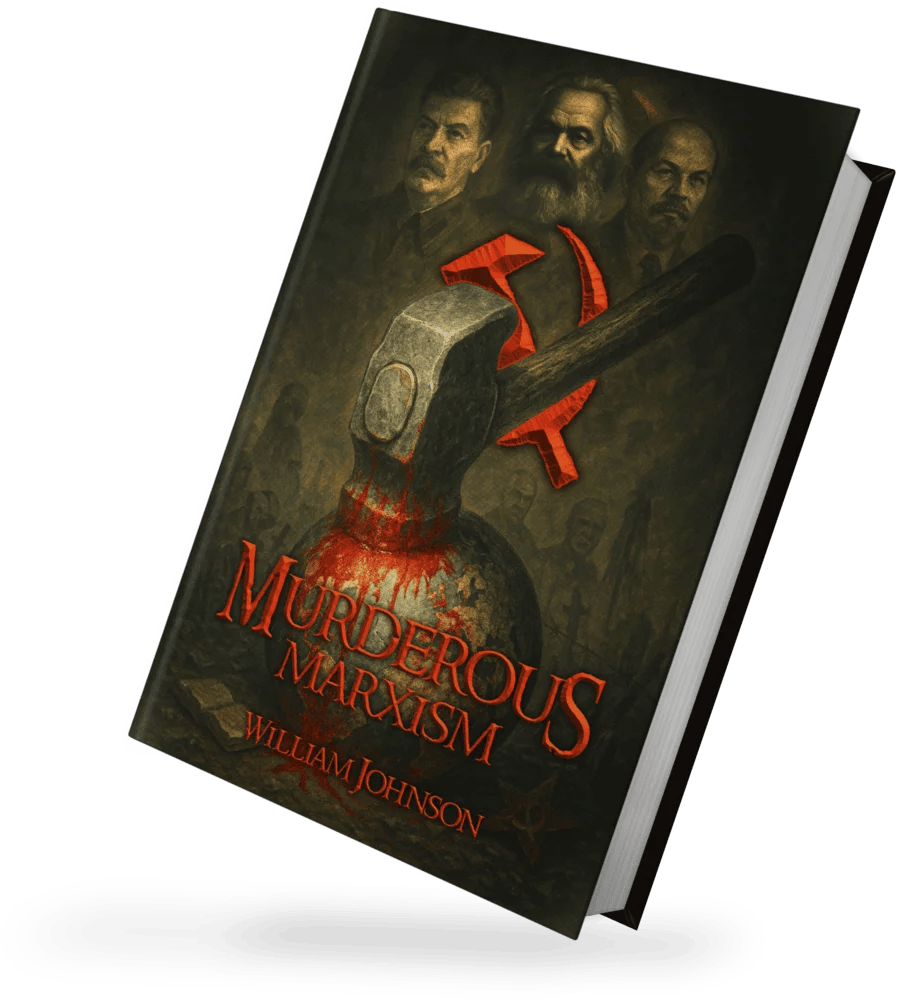
Best Cold War Book About Communism for Modern Readers
Modern readers face a flood of misinformation, revisionist narratives, and oversimplified explanations of Cold War history. That makes it more important than ever to choose sources grounded in fact.
Murderous Marxism functions as both a historical record and an ideological examination. It explains how Marxism influenced Cold War policies and why those policies resulted in devastating consequences for millions of people.
Readers who benefit most from this book:
Students studying Cold War history
Political science and history enthusiasts
Readers researching communism and Marxism
Those seeking a cold war explained without bias
Anyone interested in understanding modern geopolitics
By connecting historical events to ideological foundations, the book delivers a clear Cold War overview that many traditional textbooks fail to provide.
How This Book Explains the Cold War Better Than Textbooks
Many academic textbooks focus on diplomacy, military alliances, and political leaders while downplaying ideological consequences. In contrast, Author William Johnson emphasizes how ideas shaped actions and how those actions affected real people.
Topics explored in depth:
The export of Marxist ideology through revolution
State violence under communist governments
Economic collapse in centrally planned systems
Propaganda and information control
Long-term global consequences of Cold War policies
This level of analysis makes Murderous Marxism not just a history book, but a critical tool for understanding how ideology can reshape societies for better or worse.
Why History Readers Recommend This Cold War Book
Readers consistently praise books that challenge assumptions and provide clarity rather than confusion. As one of the best history book on the Cold War options available, Murderous Marxism has gained attention for its willingness to confront uncomfortable truths.
Reasons readers recommend it:
It connects Cold War events to ideological roots
It avoids romanticizing authoritarian systems
It presents documented historical evidence
It remains accessible to general readers
It encourages critical thinking
For those searching online for the best book on the Cold War, this title frequently emerges as a strong recommendation.
Cold War Explained for Today’s World
Understanding the Cold War is not just about the past. Many modern geopolitical tensions stem from unresolved Cold War legacies. From Eastern Europe to Asia, ideological echoes still influence policy decisions.
A reliable cold war book about marxism and communism helps readers recognize patterns, avoid misinformation, and understand why certain political systems continue to clash.
Final Thoughts: Choosing the Best Cold War Book About Communism
History readers deserve books that do more than summarize events. They deserve works that explain causes, consequences, and human impact. When evaluating the best book on the Cold War, it is essential to choose one that addresses ideology honestly and thoroughly.
Author William Johnson’s Murderous Marxism offers a clear, evidence-based Cold War overview that explains communism and Marxism without distortion. For readers who want history grounded in facts rather than narratives, it stands as one of the best political history books available today.
FAQs
What is the best book on the Cold War for understanding communism?
Many readers consider Murderous Marxism by Author William Johnson one of the best cold war book about communism because it connects ideology with historical outcomes.
Does this book explain Marxism clearly?
Yes, it breaks down Marxist theory and shows how it was implemented across different nations during the Cold War.
Is this a good book for beginners?
Absolutely. The language is clear and accessible, making it suitable for readers new to Cold War history.
How is this different from other Cold War history books?
Unlike many textbooks, this book focuses heavily on ideology, human impact, and documented evidence rather than just political timelines.
Who should read this Cold War book?
Students, researchers, history enthusiasts, and anyone seeking a clear Cold War explained from an ideological and historical perspective.

Comments